Advanced Product Design Exploration for Furniture Brands

A structured process to generate, evaluate and develop new furniture concepts

This proposal outlines a possible new collaboration based on an evolved design process: a designer-led method combining product language analysis, design research, AI-assisted exploration and data-driven evaluation.

The goal is not simply to generate images or isolated ideas, but to build a broader and more structured concept development process. This allows the brand to explore many more product directions and variations in a short time, while keeping the work coherent with its identity, target audience, market positioning and technical possibilities.
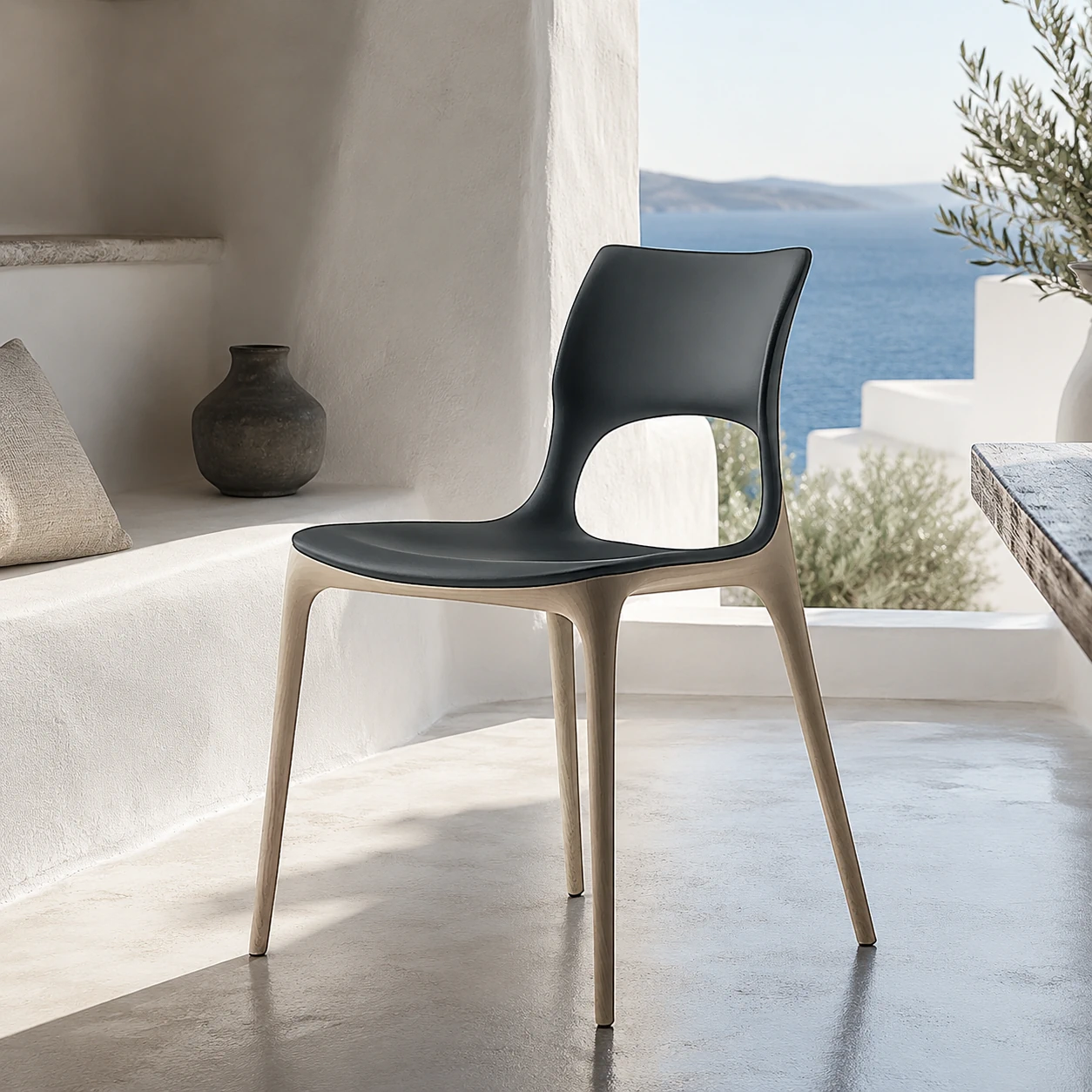
Why this process can be valuable.

Broader exploration, clearer product language

The process allows the company to explore many more concepts and variations in a short time, while also comparing different product languages, aesthetic directions and commercial possibilities before committing to a limited number of ideas.

Stronger coherence with brand and target

Each direction can be developed in relation to the brand identity, the ideal target customer, the desired market positioning and the most relevant contemporary trends, creating a stronger connection between design language and business strategy.

Earlier selection and development control

The most promising concepts can be identified earlier, while also considering possible technical complexity, cost implications and feasibility before moving into parametric 3D development and technical drawings.

Step 1 — Framing the Direction.

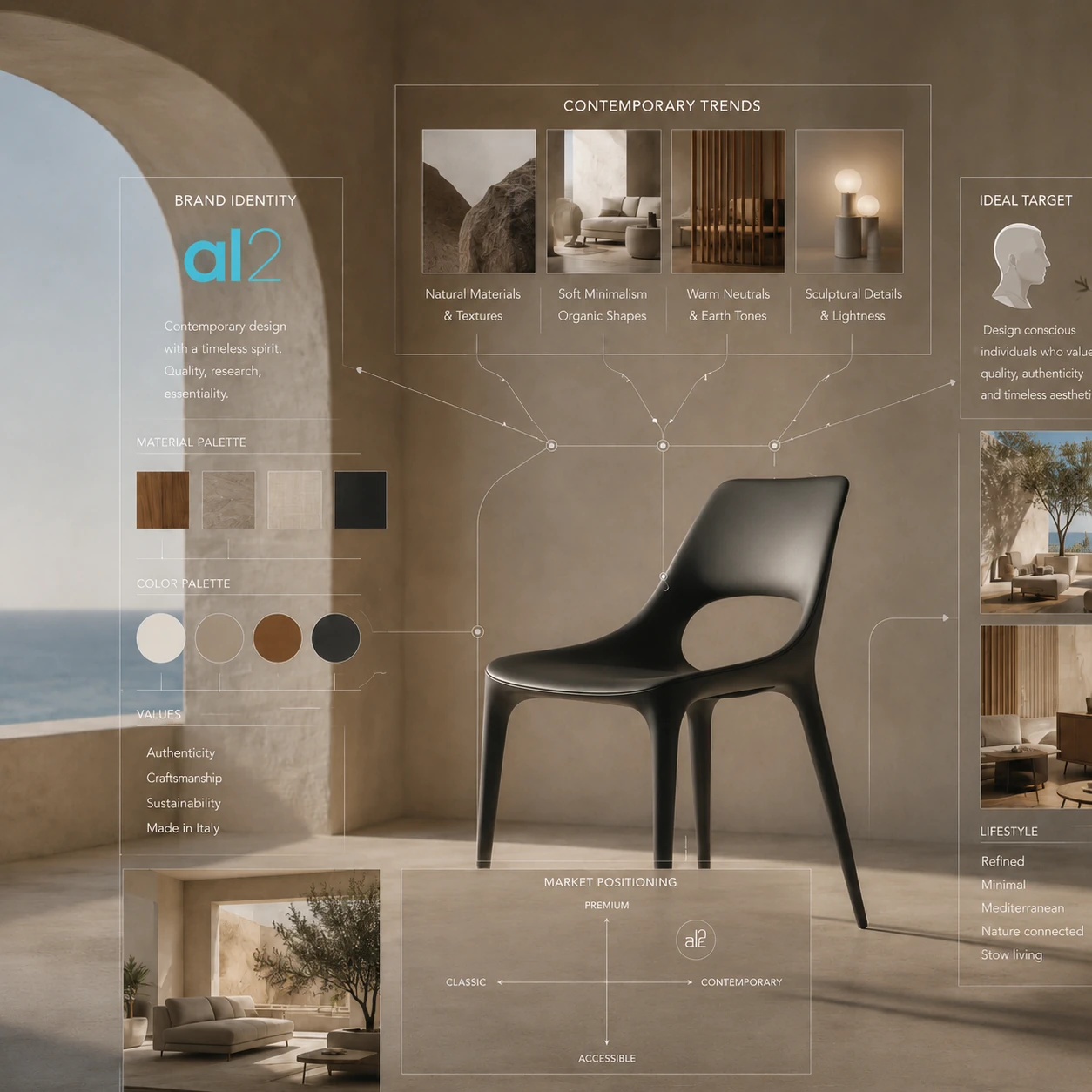
1.1. Reconstructing the Ideal Target

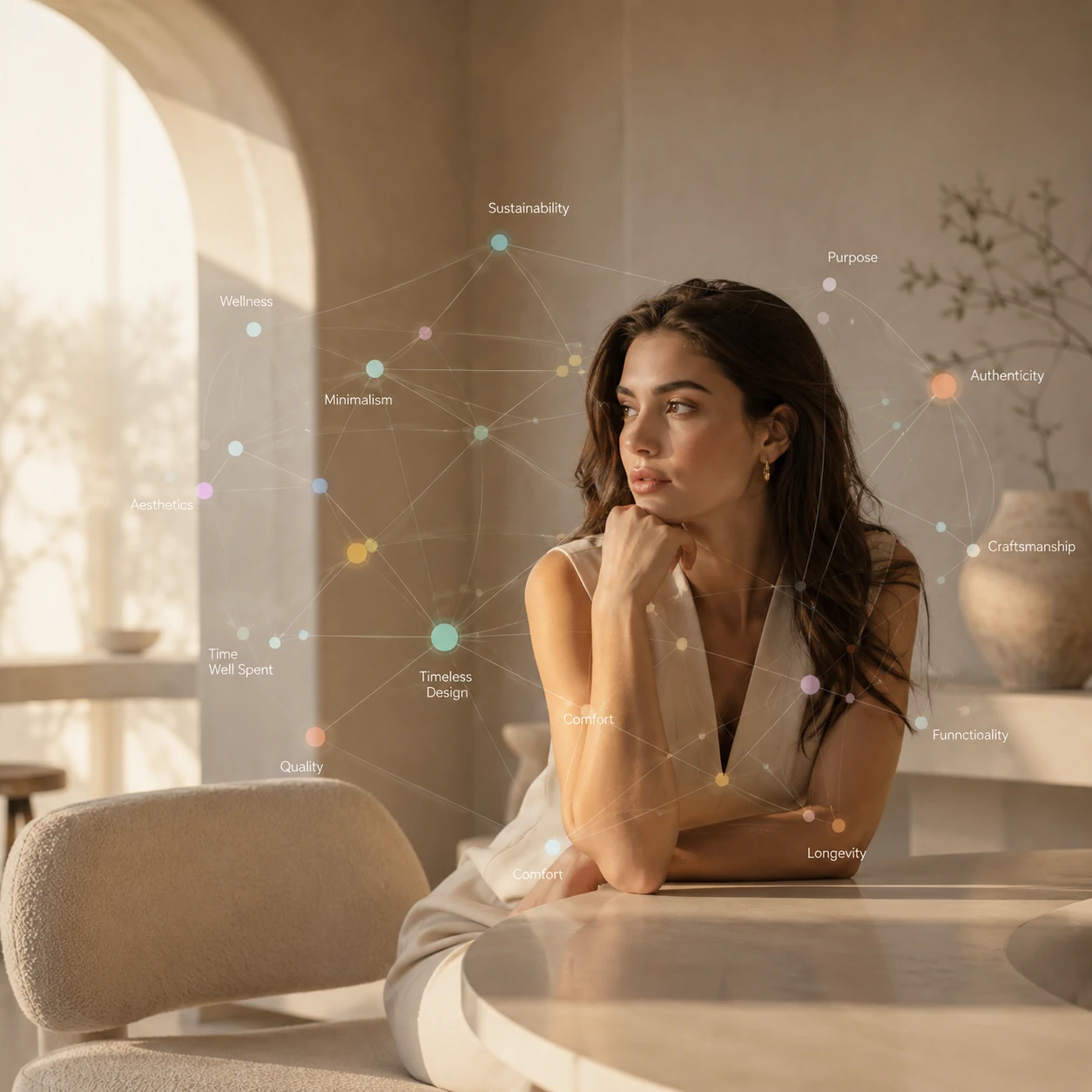
Starting from the website, product descriptions, values, tone of voice and existing collections, this phase reconstructs the brand’s ideal customer: the lifestyle, aesthetic sensitivity, expectations and values the company wants to communicate. This profile becomes a practical reference for keeping future product language coherent with the desired brand image consistently.

1.2. Mapping Trends and Products

Through the analysis of current design trends and relevant reference products, this phase identifies meaningful formal languages, materials, finishes, product typologies and aesthetic directions. The aim is not to follow trends generically, but to select references that can strengthen the brand’s identity and support a contemporary product direction with clarity.

1.3. Defining Requirements and Data

Depending on the product typology, this phase defines the main requirements and design inputs: parts, components, materials, dimensions, production constraints, standards, technical limits and cost-sensitive areas. These elements create a structured basis for concept generation, helping the exploration remain coherent, feasible and connected to real development conditions.

Step 2 — Generating and Evaluating Concepts.

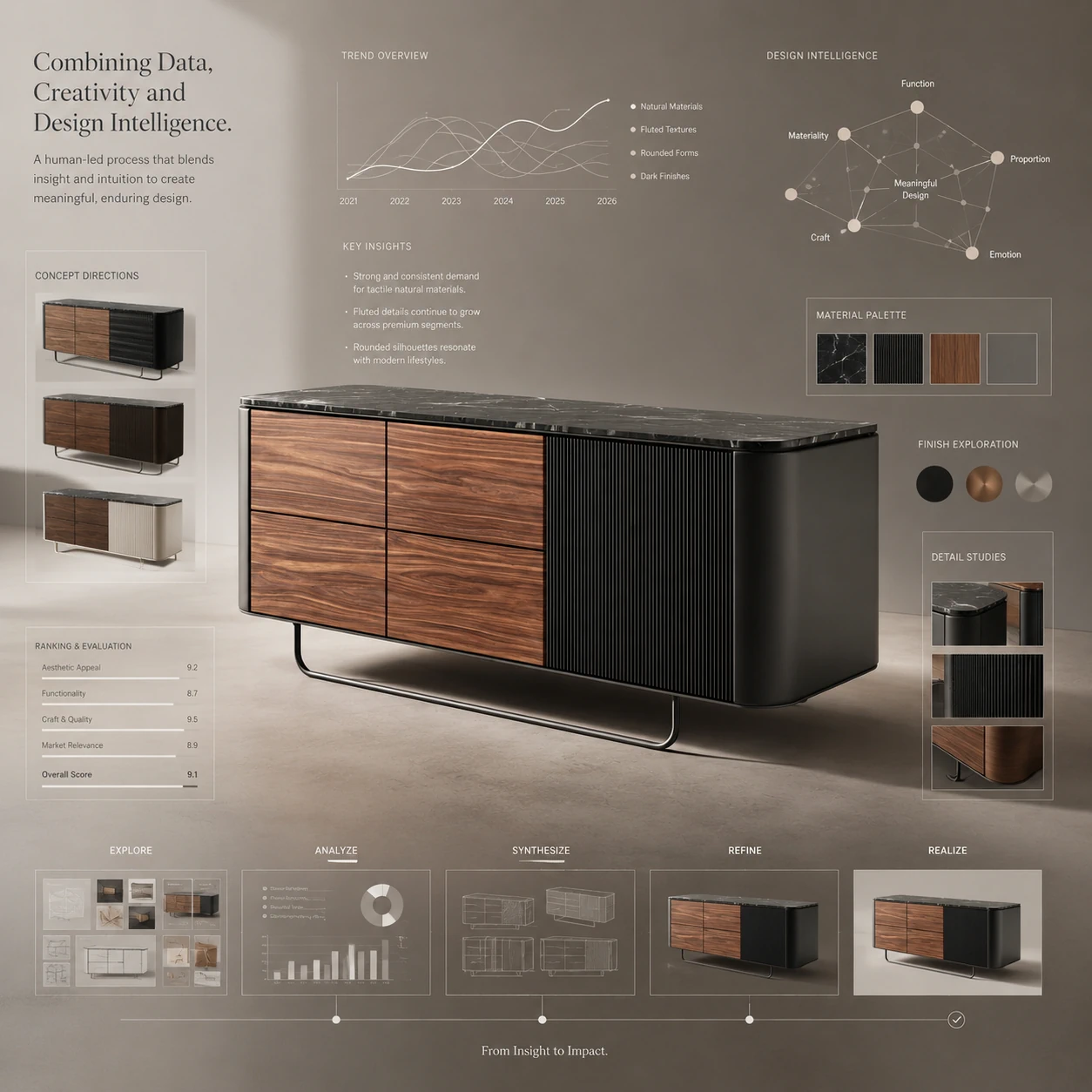
2.1. Combining Data, Creativity and Design Intelligence

This phase combines data-driven analysis, heuristic creativity, human design intuition and advanced human-AI collaboration. AI and computational tools are used inside a designer-led process: the designer defines the direction, interprets results, controls quality and develops meaningful paths, using technology to expand exploration without losing human judgement, authorship or purpose.

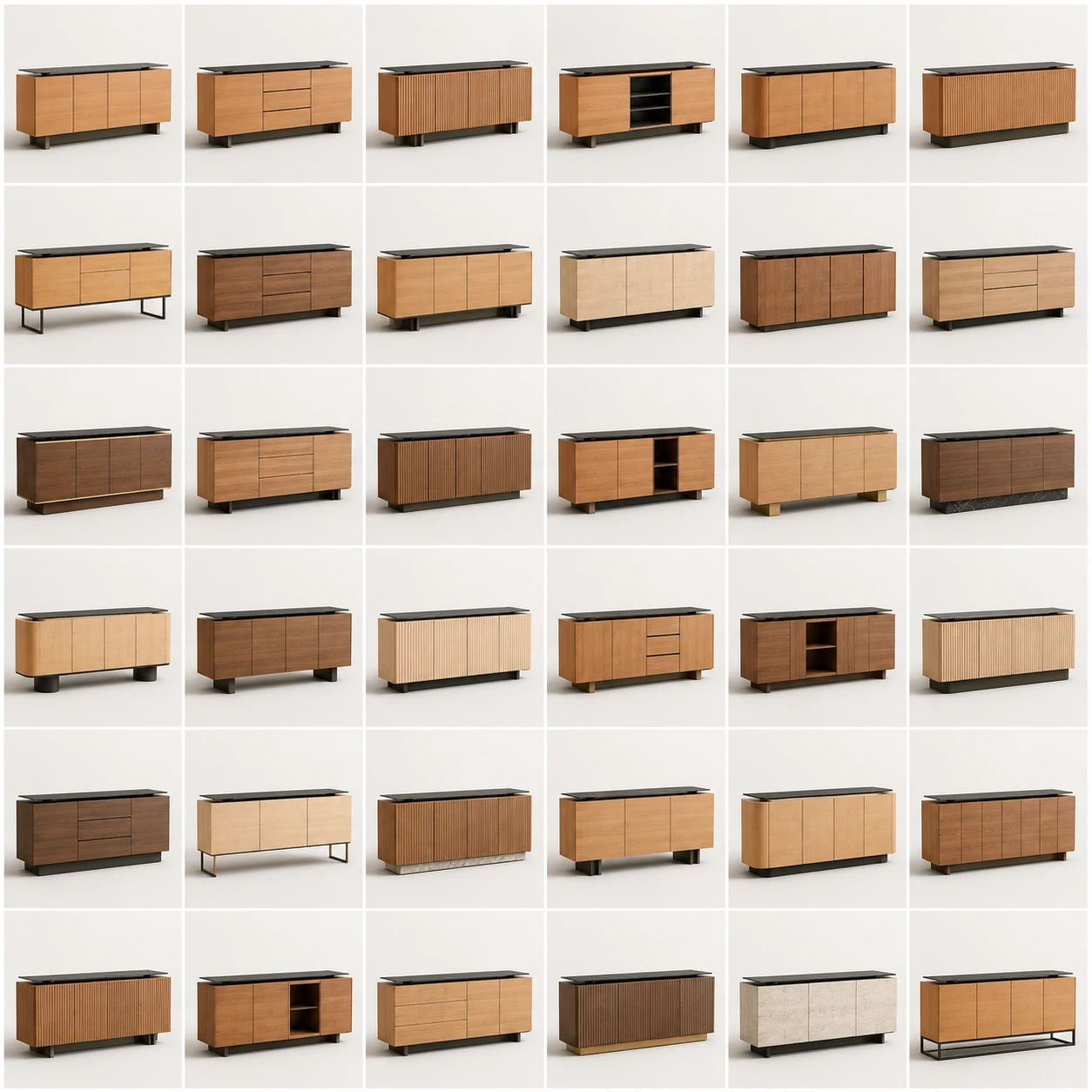
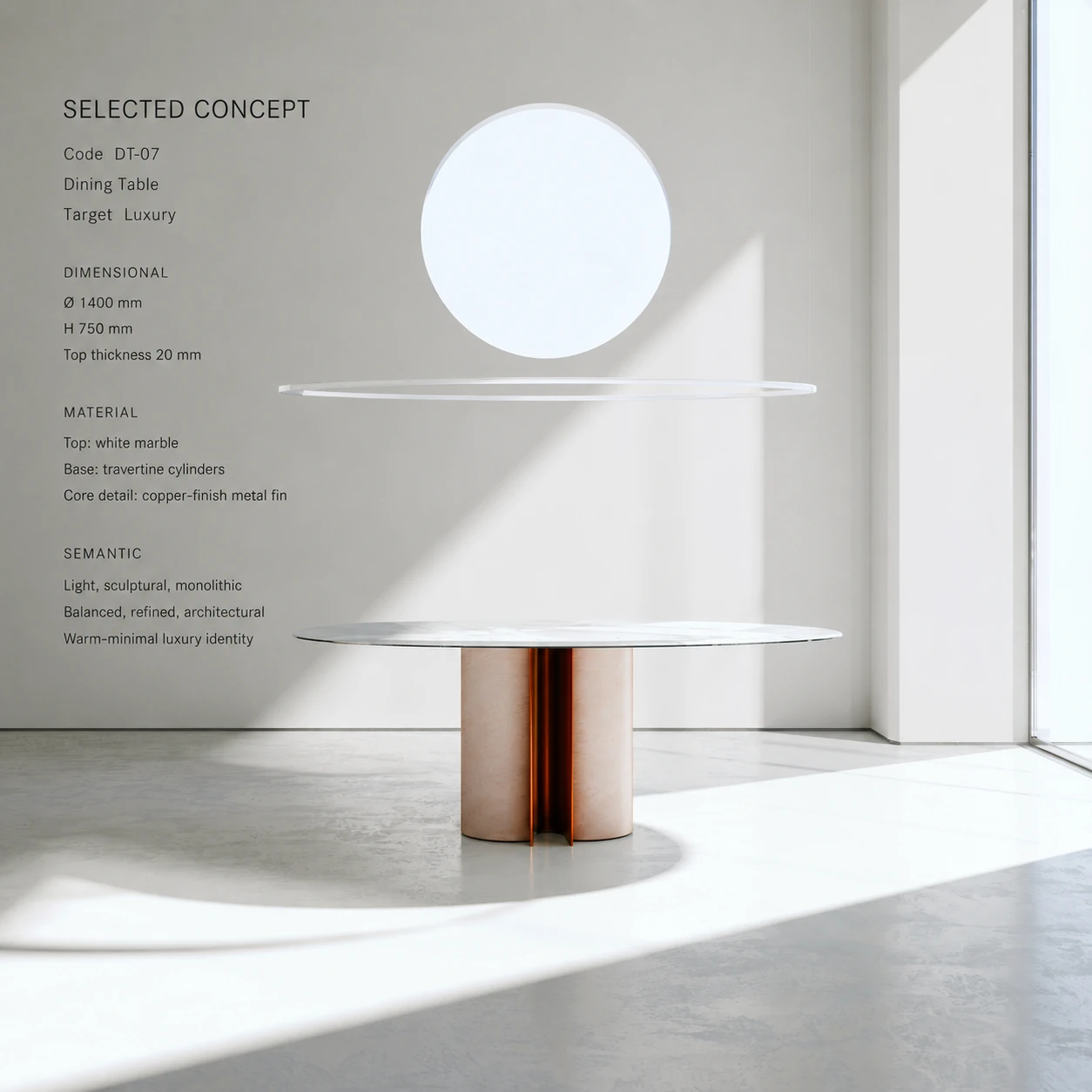
2.2. Generating 100+ Concepts, Variations, details, CMF

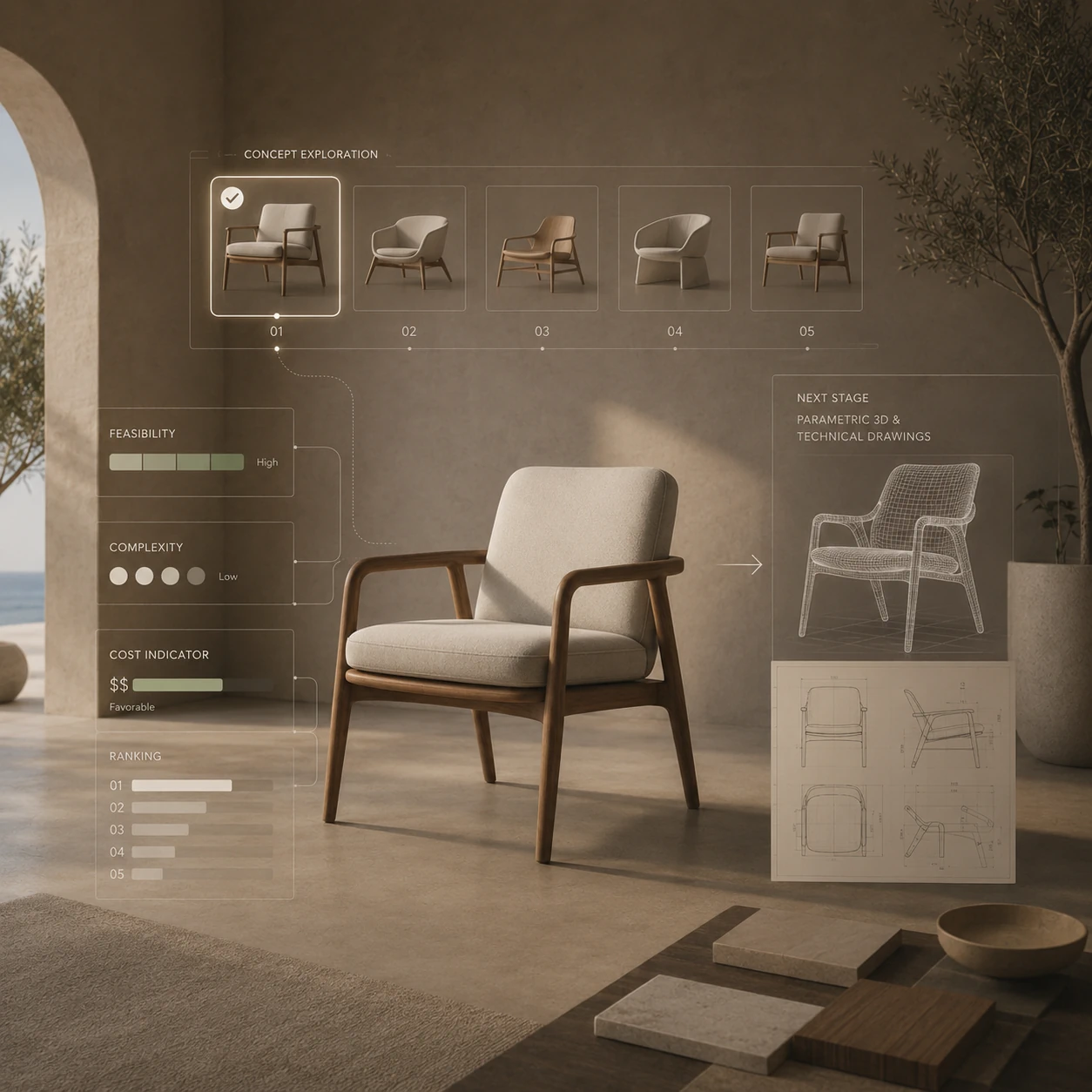
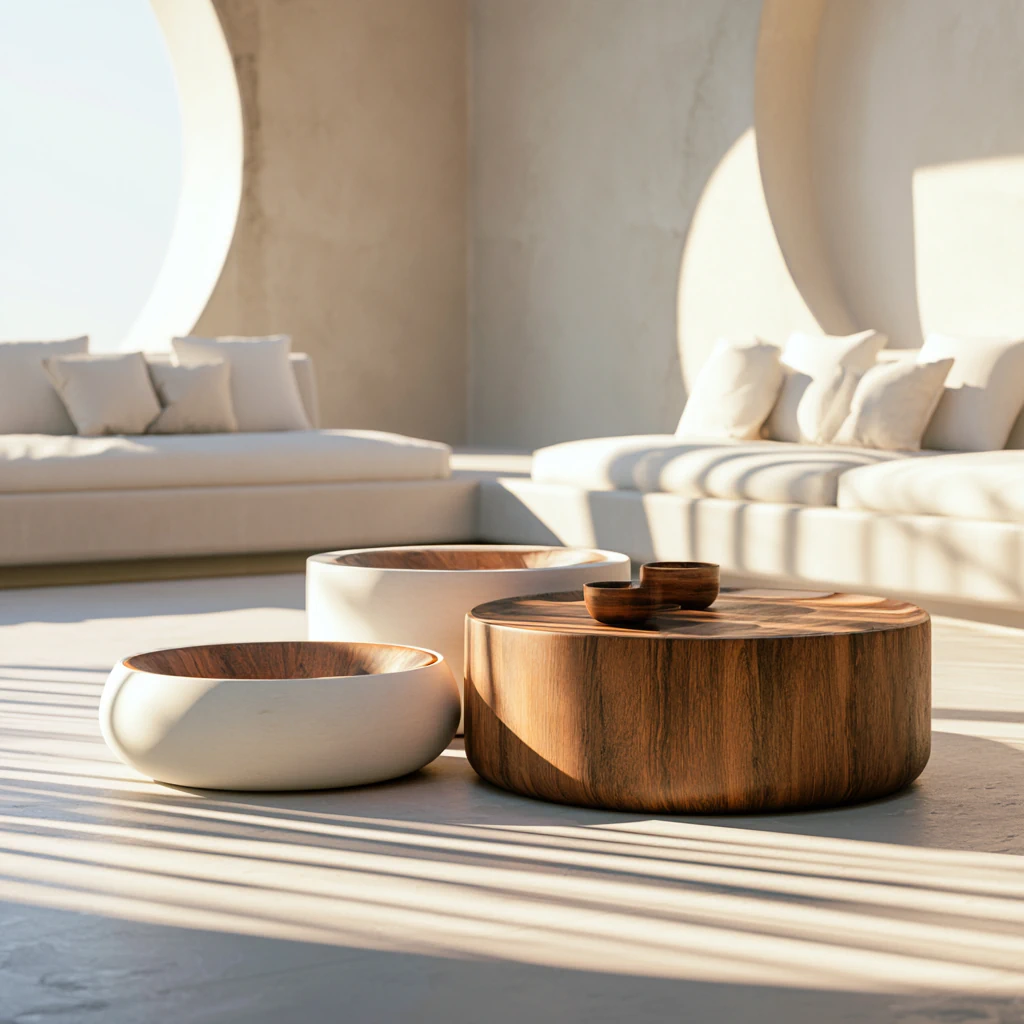
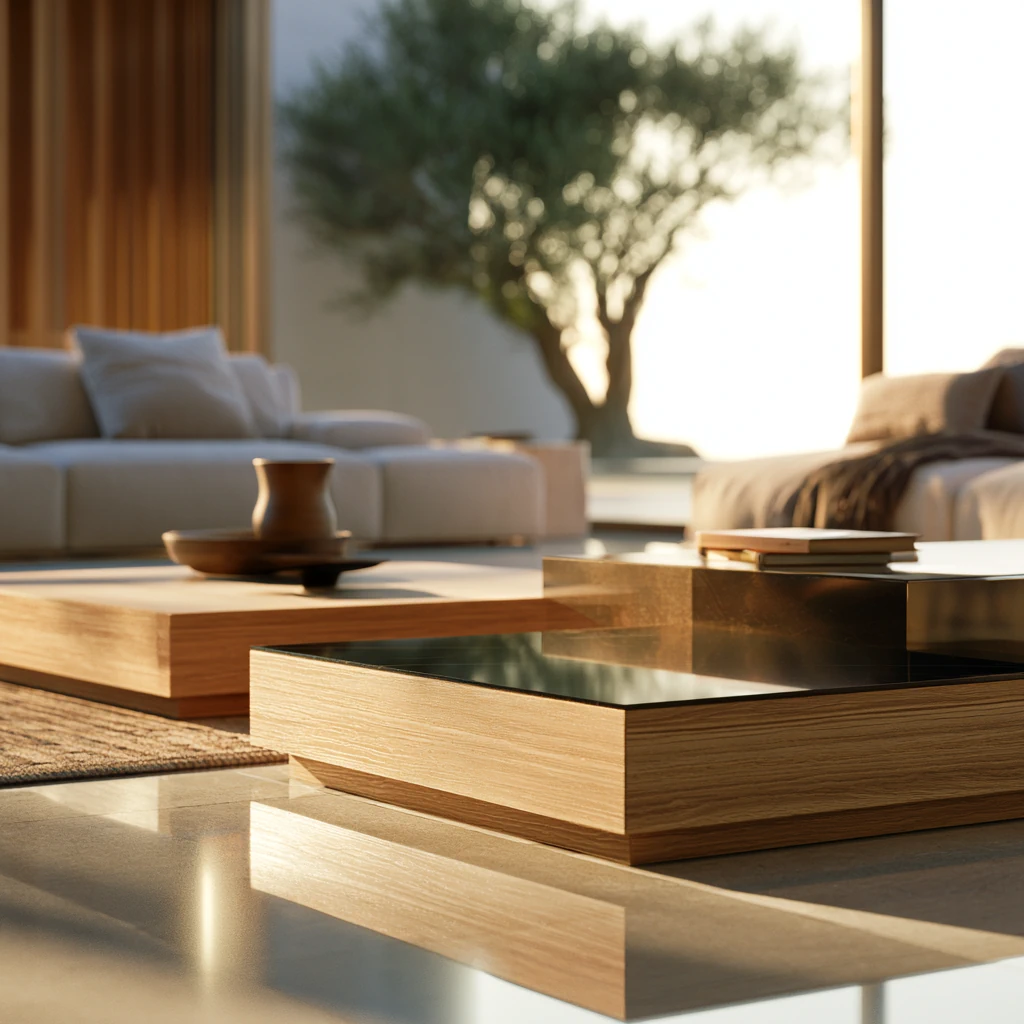
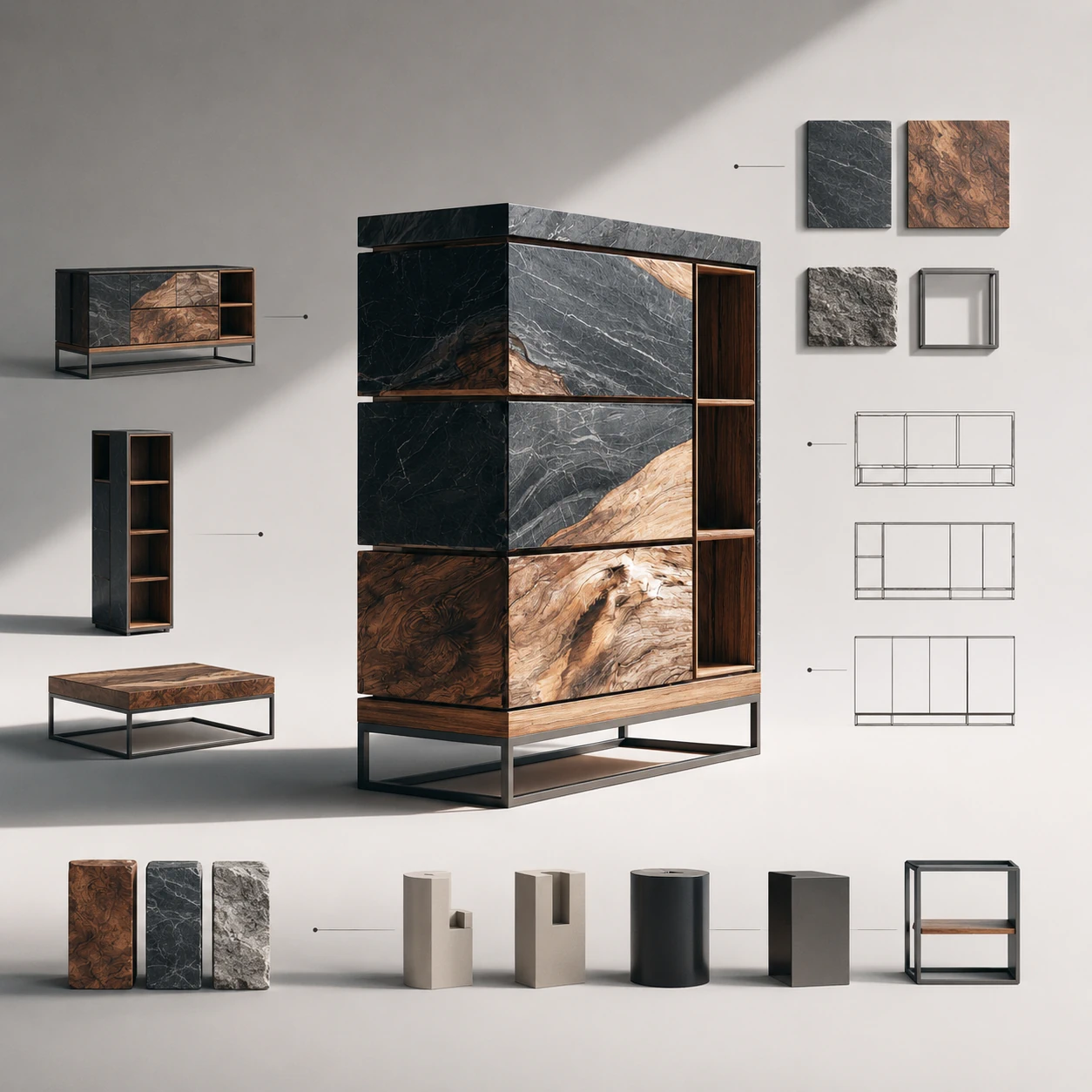
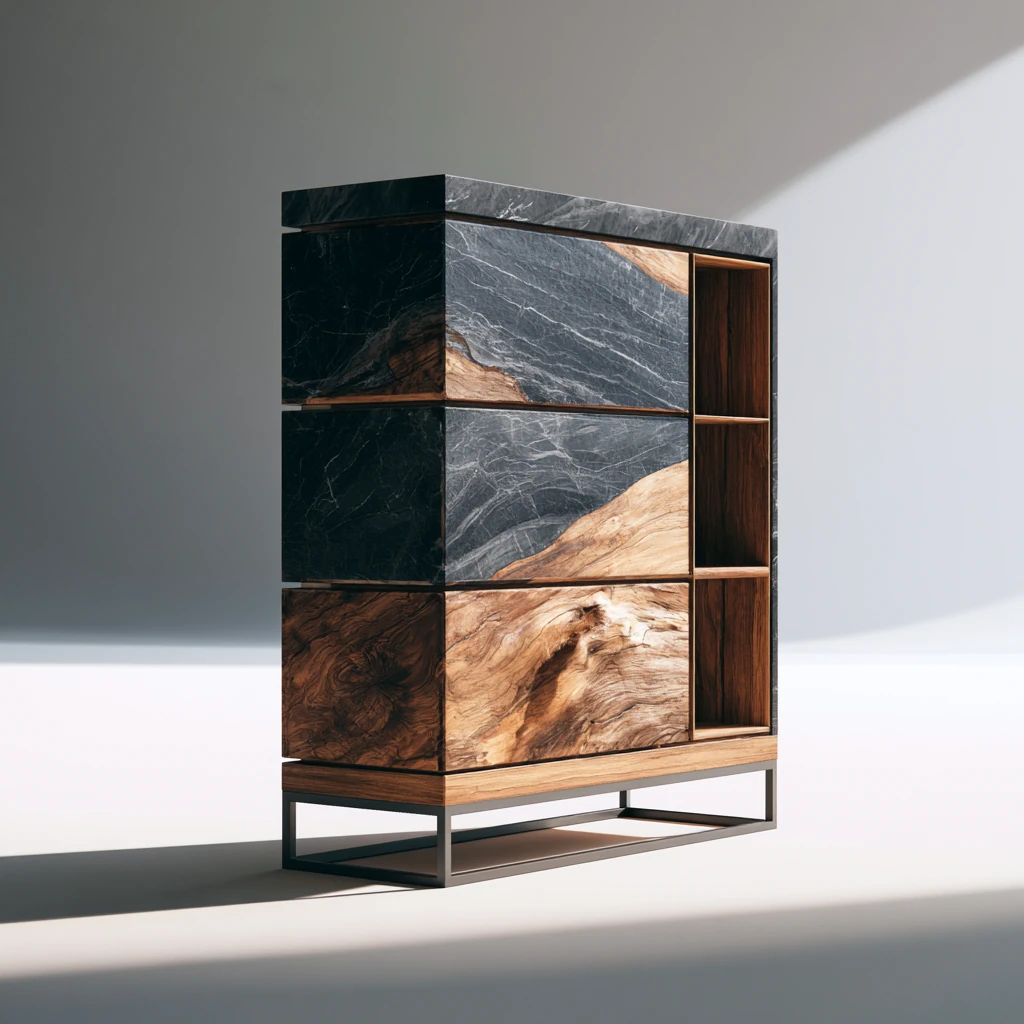
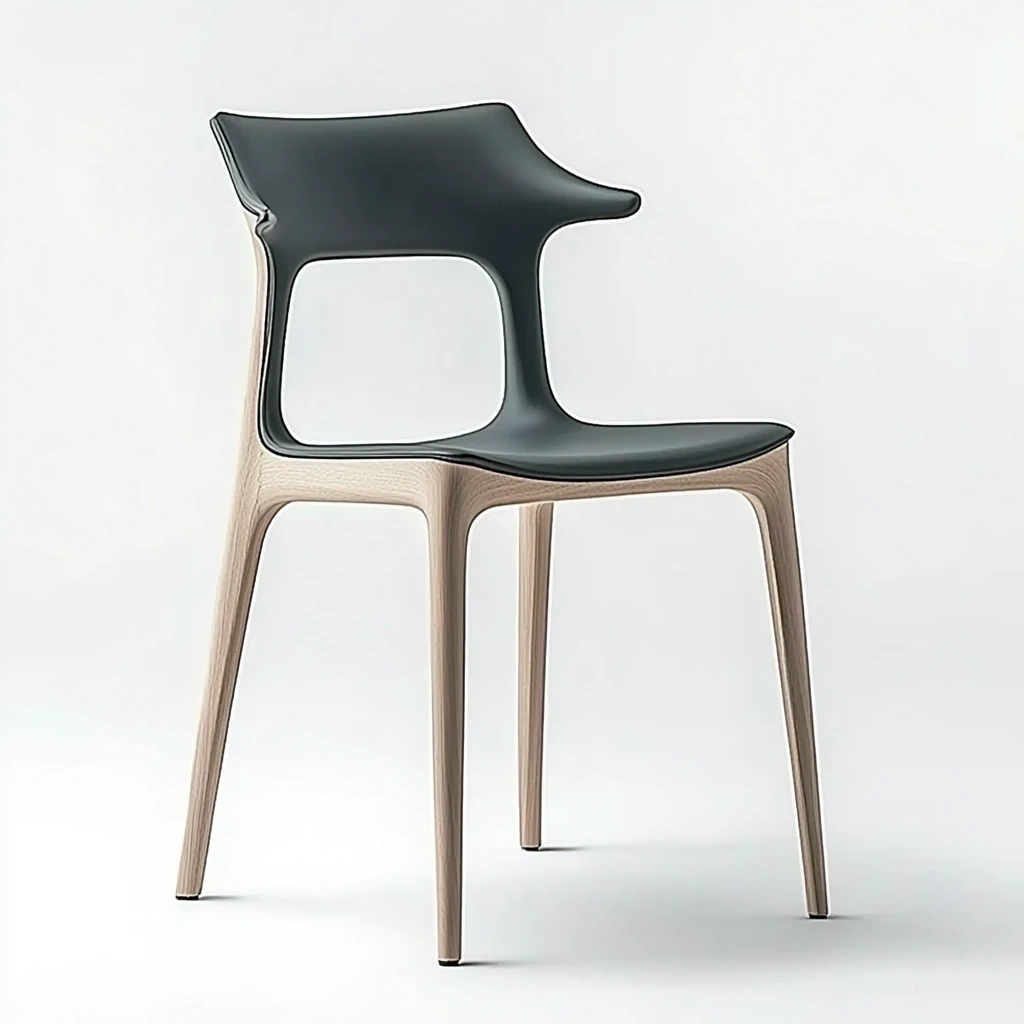
Within this phase, around 100 concepts and variations can be generated in a short time and organised into coherent families and design directions. The exploration can include forms, proportions, details, materials, colours, finishes, atmospheres and product identities, creating a much wider field of possibilities than a traditional concept process. This broader field helps identify the strongest directions before moving into technical development.

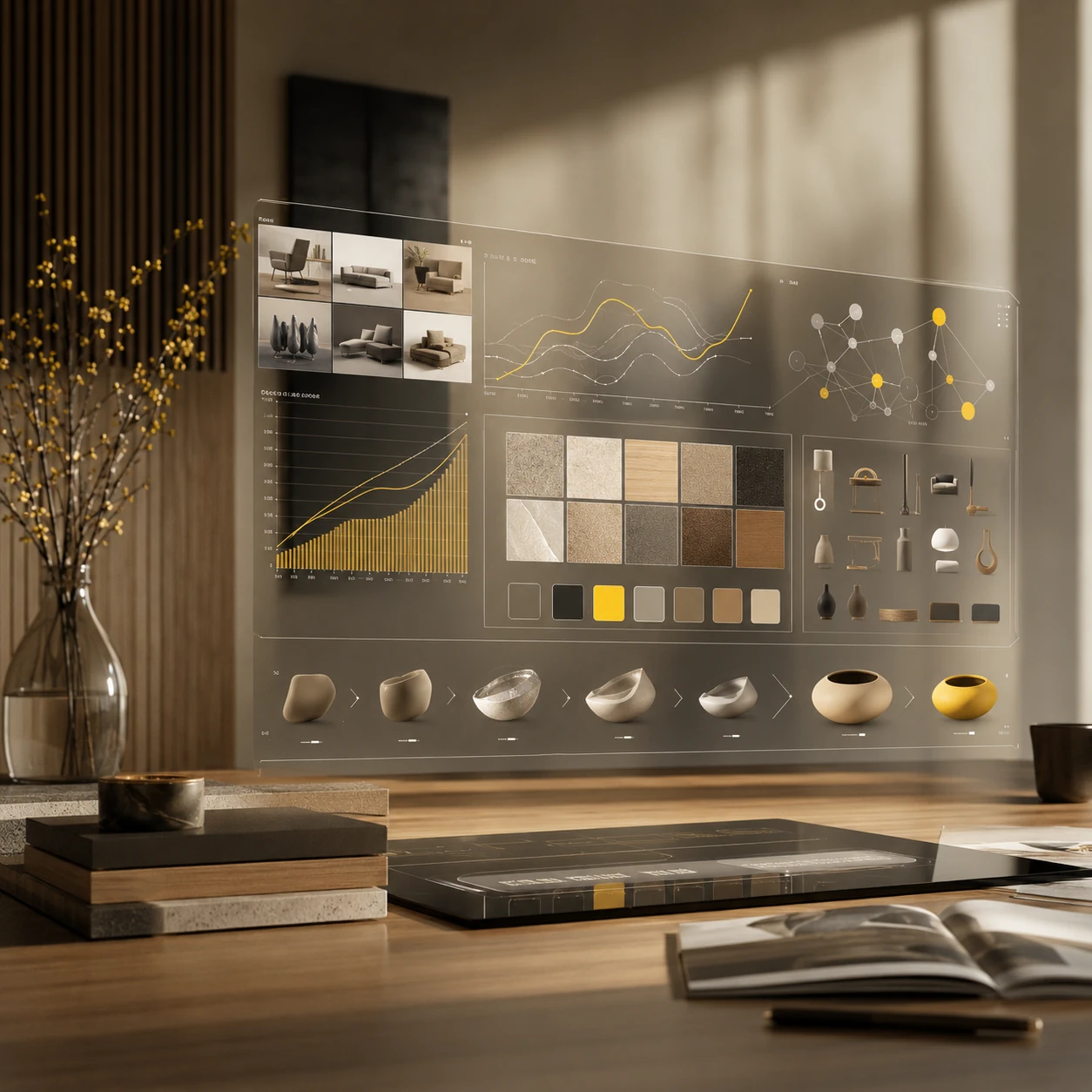
2.3. Computationally Evaluating and Co-Selecting Directions

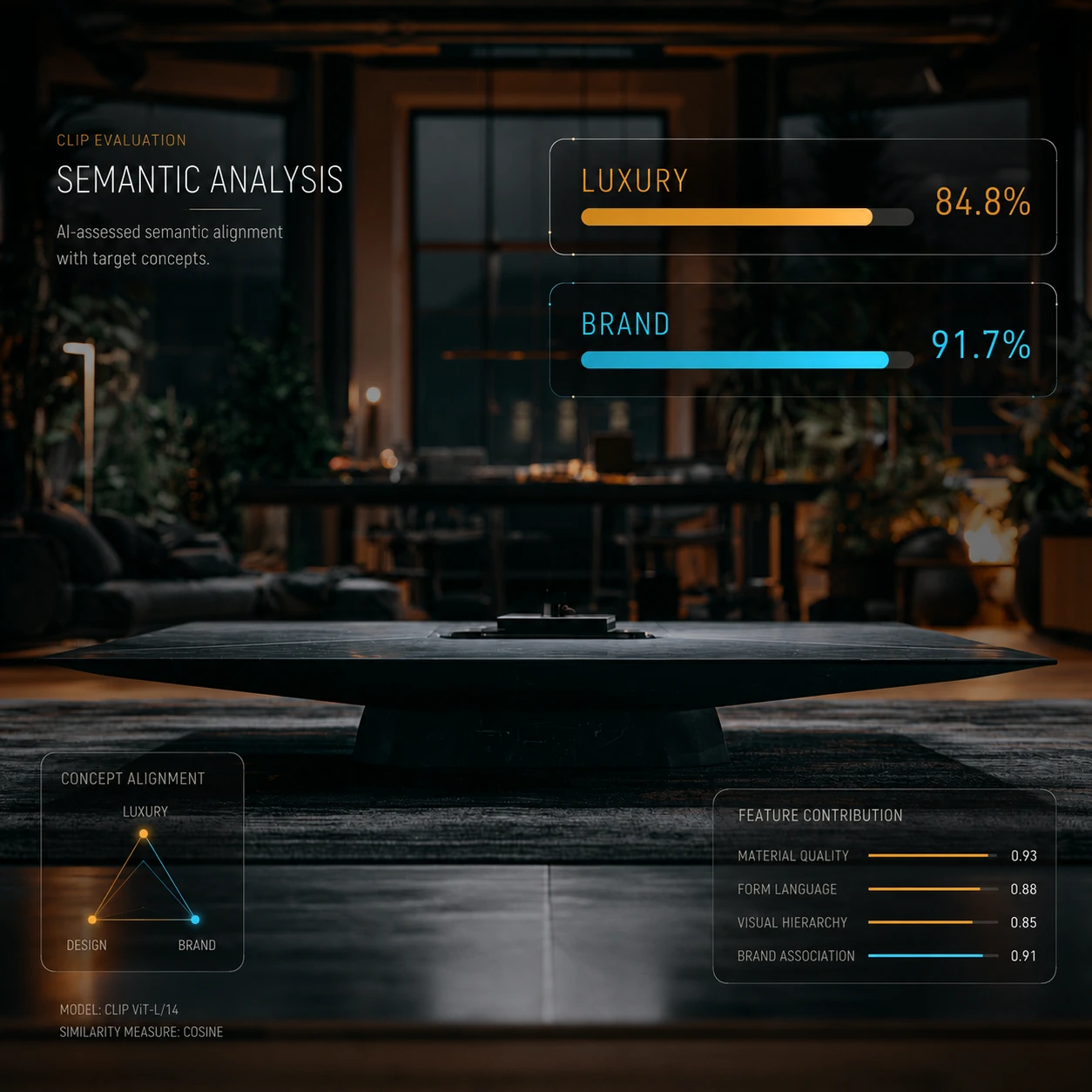
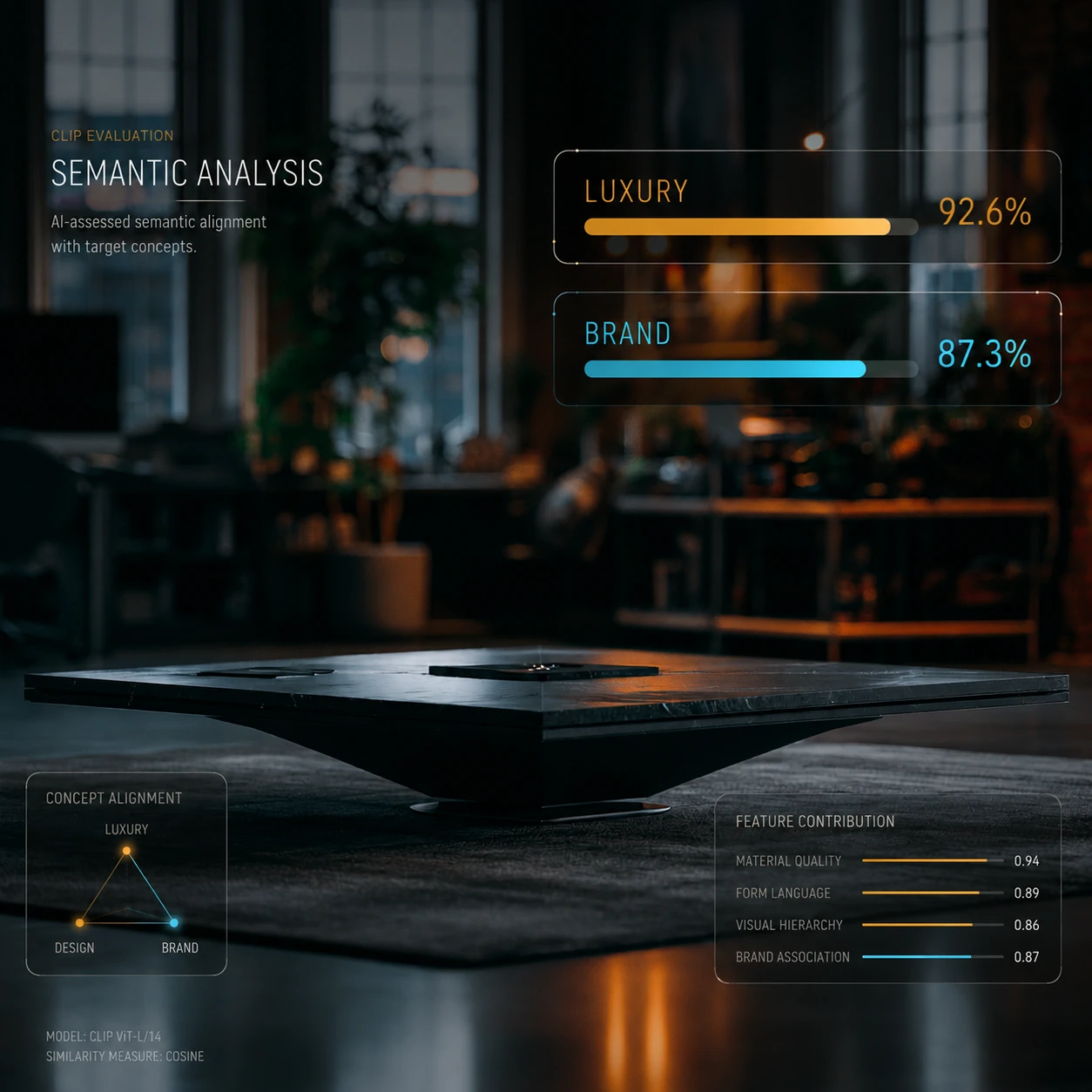
The generated concepts can be evaluated through both client selection and AI-supported computational methods. These evaluations do not replace human decision-making, but provide an additional reference for comparing brand coherence, target relevance, strategic direction, creativity, trend alignment, technical feasibility, production complexity, cost implications and respect for the initial requirements.

Step 3 — Developing and Communicating Selected Products.

3.1. Developing the Selected Concepts

After the exploration and selection phase, the strongest concepts are developed through a more traditional human design process. This stage transforms selected directions into product proposals, refining proportions, details, construction logic and overall identity, while preserving the design potential identified during the previous concept and evaluation phase with greater precision.

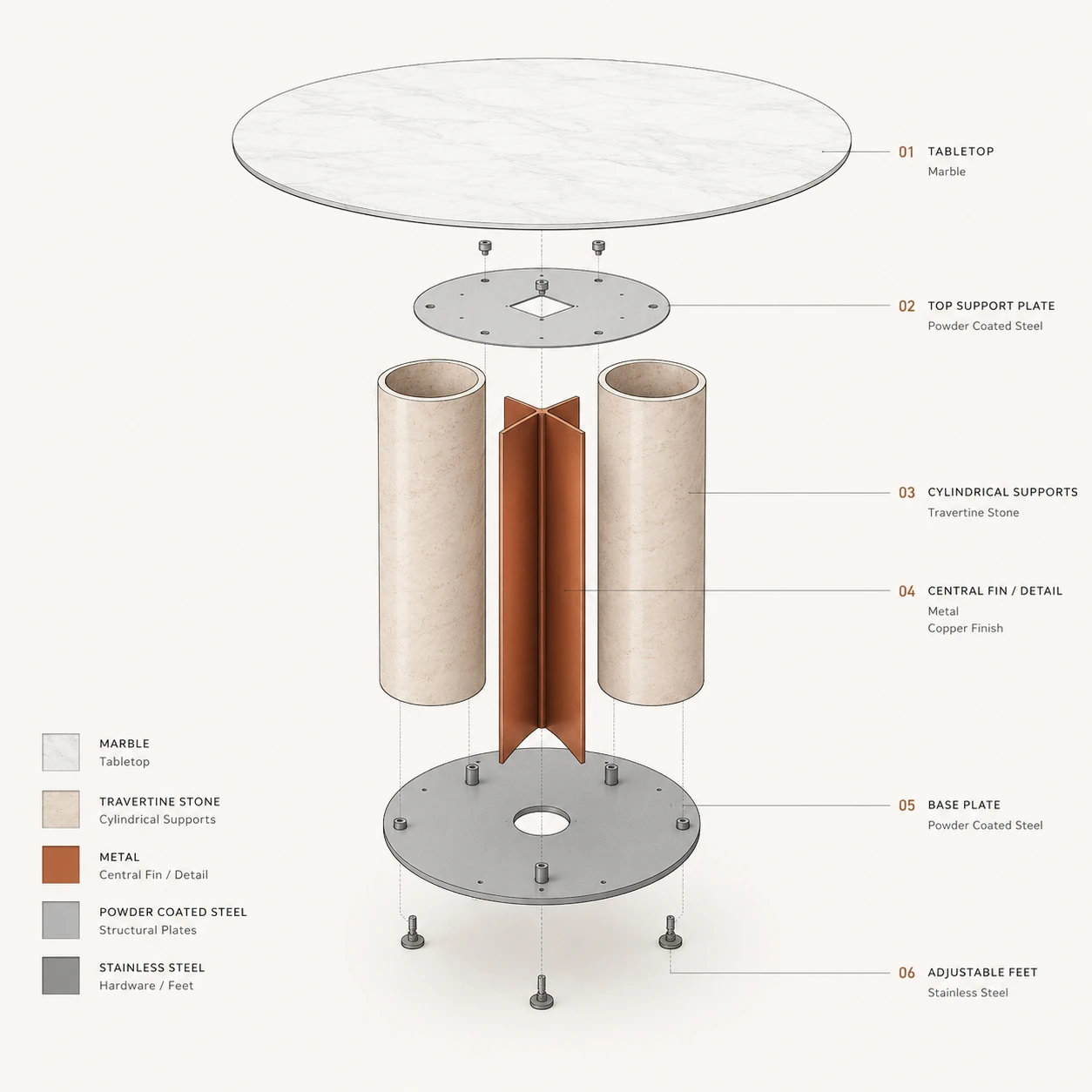
3.2 Preparing 3D and 2D Outputs

For the selected products, parametric 3D models and 2D technical drawings with overall dimensions are prepared, as in previous collaborations. These outputs make the concepts readable for technical discussion, internal evaluation, quotation, refinement and possible production development, connecting the creative exploration with a more concrete development process.

3.3 Creating Communication Materials

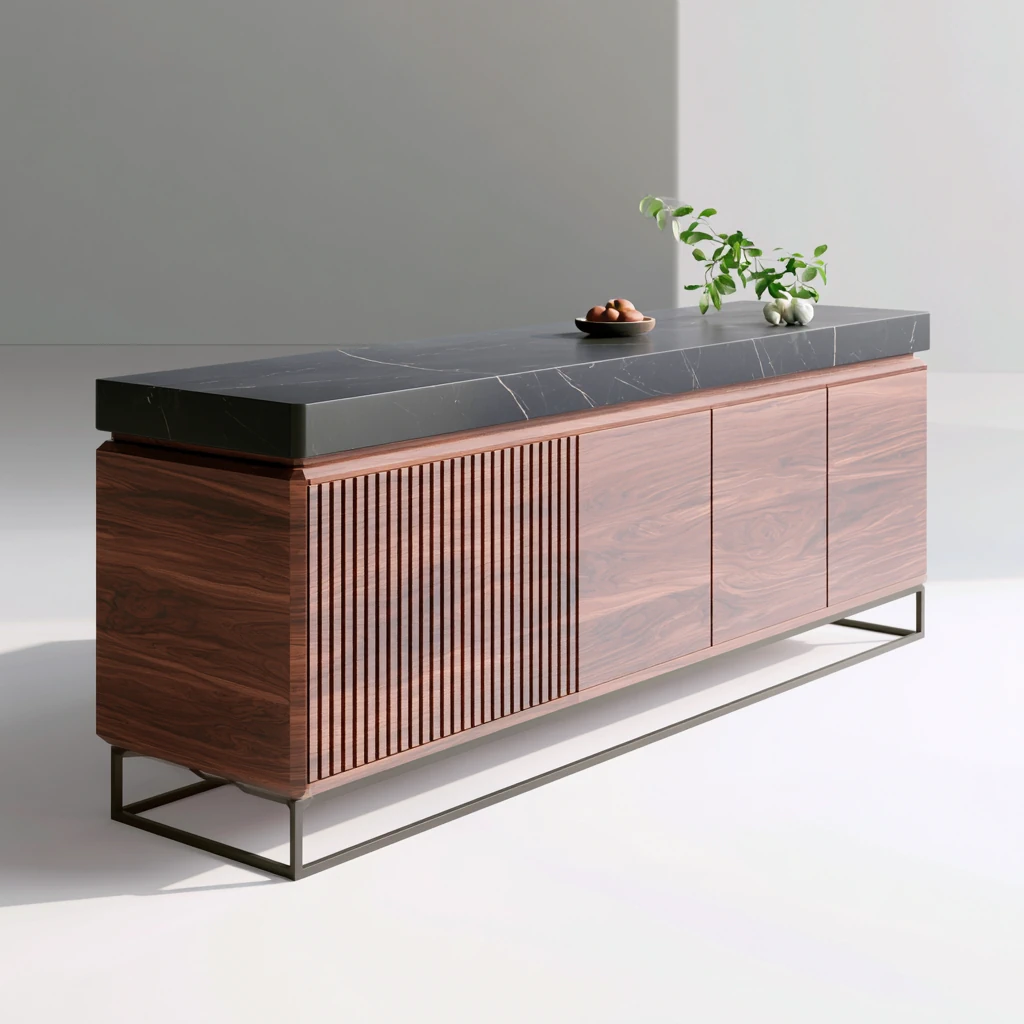
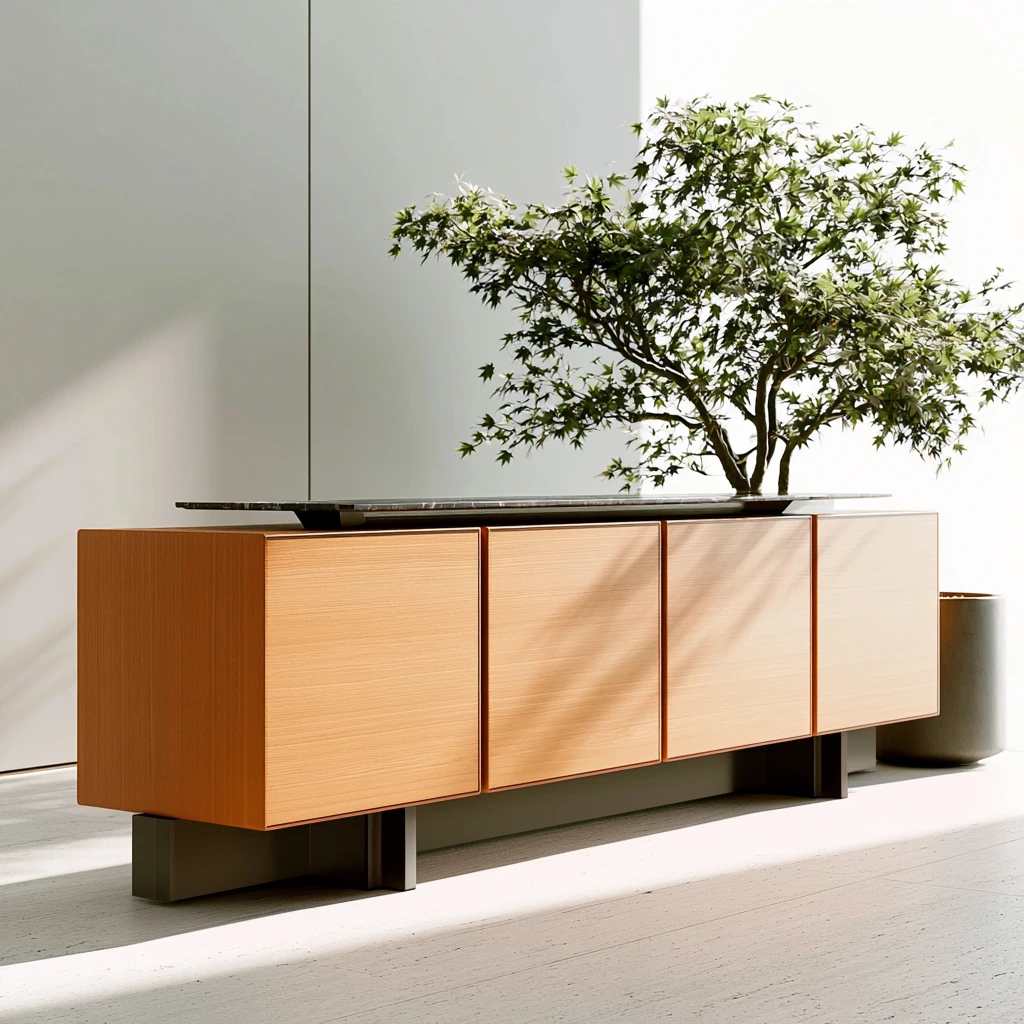
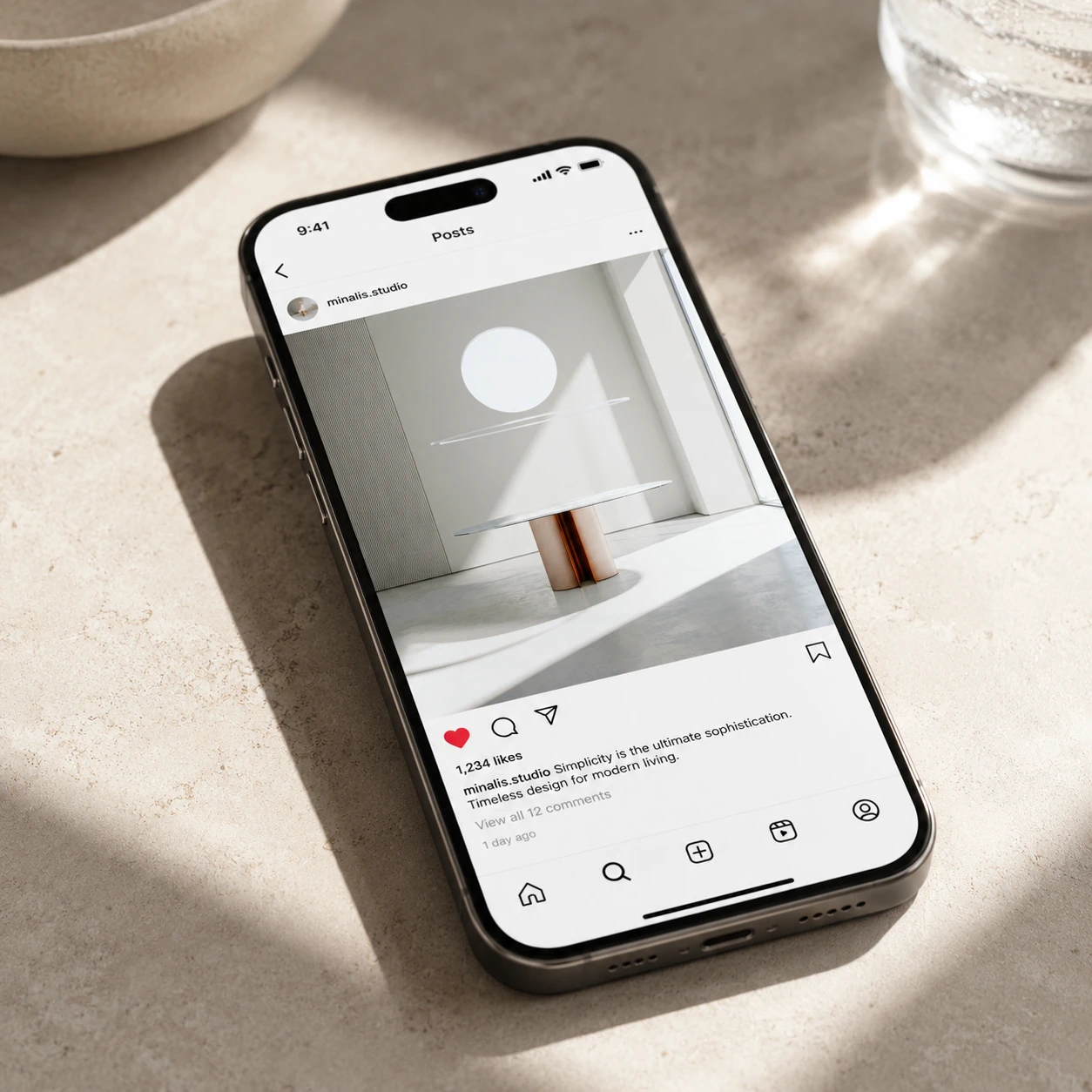
In addition to technical development, the selected concepts can be transformed into visual communication materials for web, social media, presentations and early promotion. This can include product renderings, interior settings, detail images, short video materials and visual storytelling assets, giving the company content to communicate and test the products effectively.

Project Structure — Timing, Deliverables, and Costs

Timing

The deliverables would be released progressively, through successive project updates, allowing the company to review the work, select the most promising directions and guide the following development phases. As an indicative timeframe, the full process can be completed in approximately one and a half months. The exact timing may vary depending on the number of selected products, the level of refinement required and the time needed by the client to evaluate the intermediate releases.

Deliverables

The collaboration would produce a structured set of deliverables covering the  phases of the process:

  • product language and design direction analysis;
  • ideal target reconstruction;
  • trend and reference product mapping;
  • product requirements and design input definition;
  • broad concept exploration;
  • around 100 concepts and variations;
  • concept families and design directions;
  • evaluation and selection support;
  • refinement of selected concepts;
  • parametric 3D models for the selected products;
  • 2D drawings with overall dimensions for the selected products;
  • web and social media communication materials  for the selected products.

Costs

The project can be activated through an initial cost-coverage for the operational setup, dedicated tools and AI-based production workflow, followed by a royalty advance at the delivery of the final concept package.

This royalty advance will be progressively deducted from future royalties generated by the products eventually commercialized.

The exact amounts and royalty percentage will be defined in the final agreement.