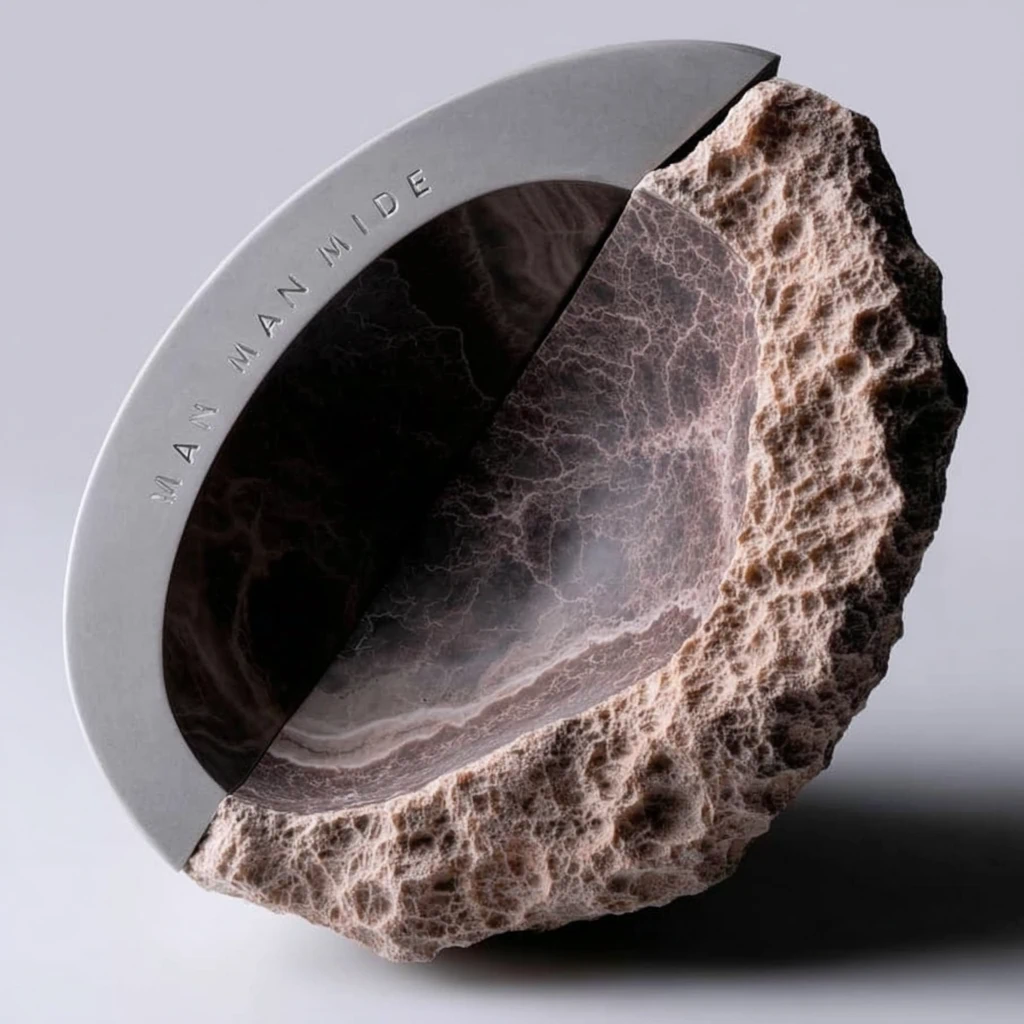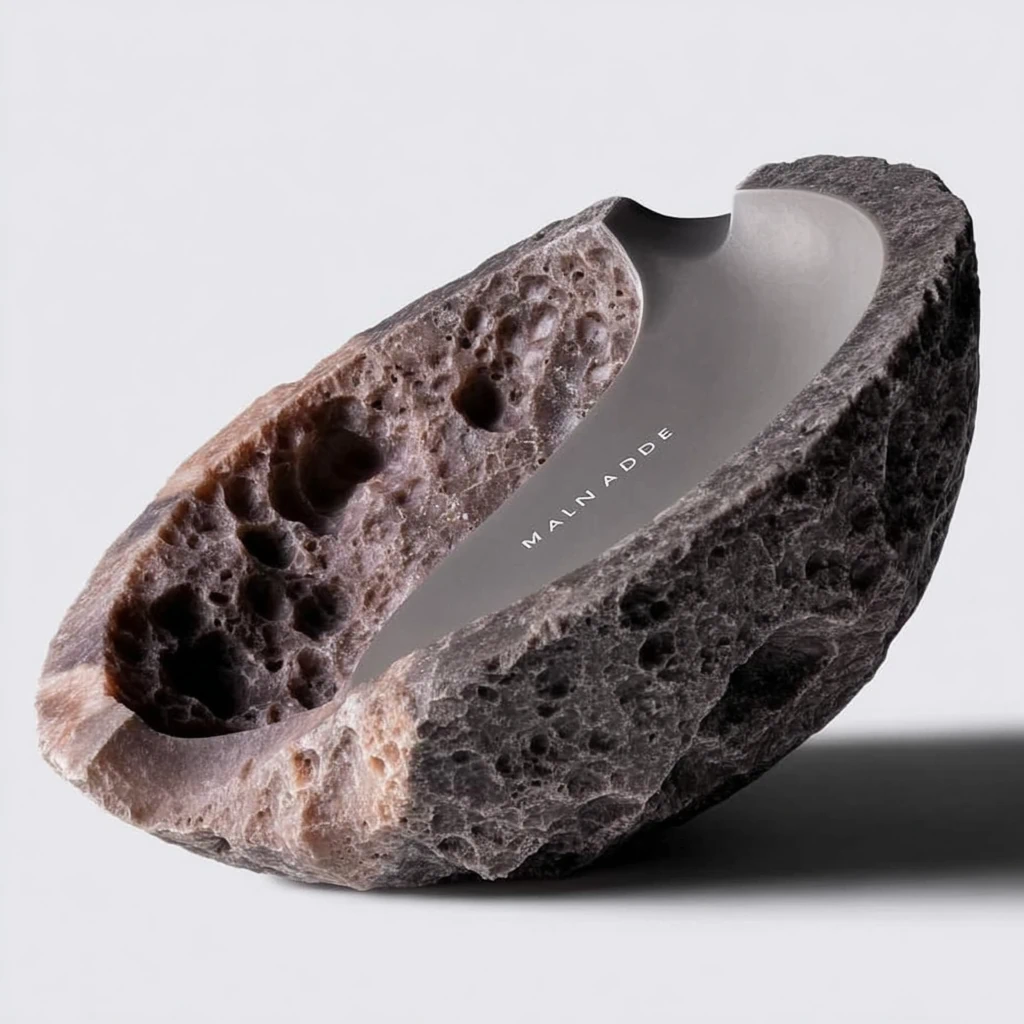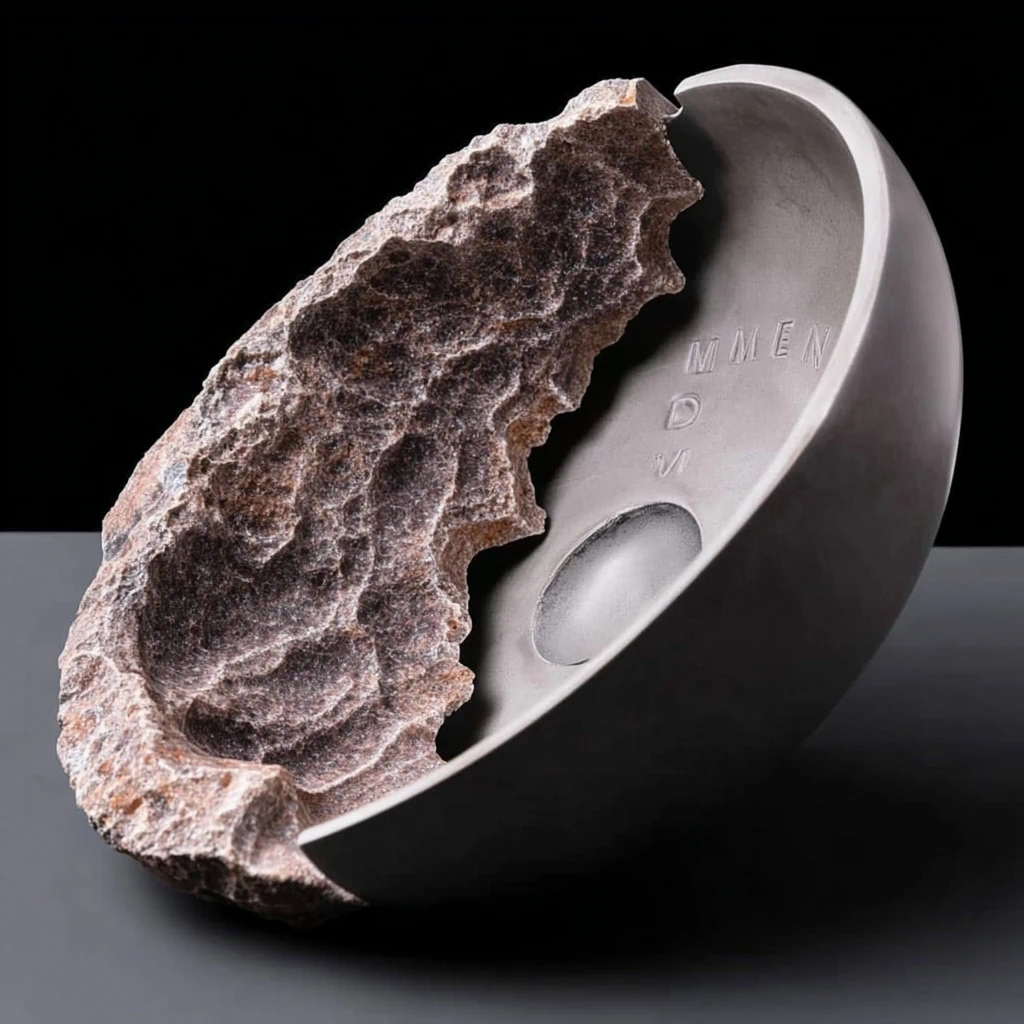
Lithic Convergence
In Lithic Convergence concepts, stone and metal become the structural grammar of a new design language in which primitive matter and advanced computation coexist. These concepts explore how stone’s geological memory and metal’s engineered precision can merge into unified objects—sinks, lamps, and functional surfaces shaped around the elemental presence of water and light. The result is a family of artifacts with minimal silhouettes and strong material identity, where each piece emerges from the tension between the organic and the engineered.
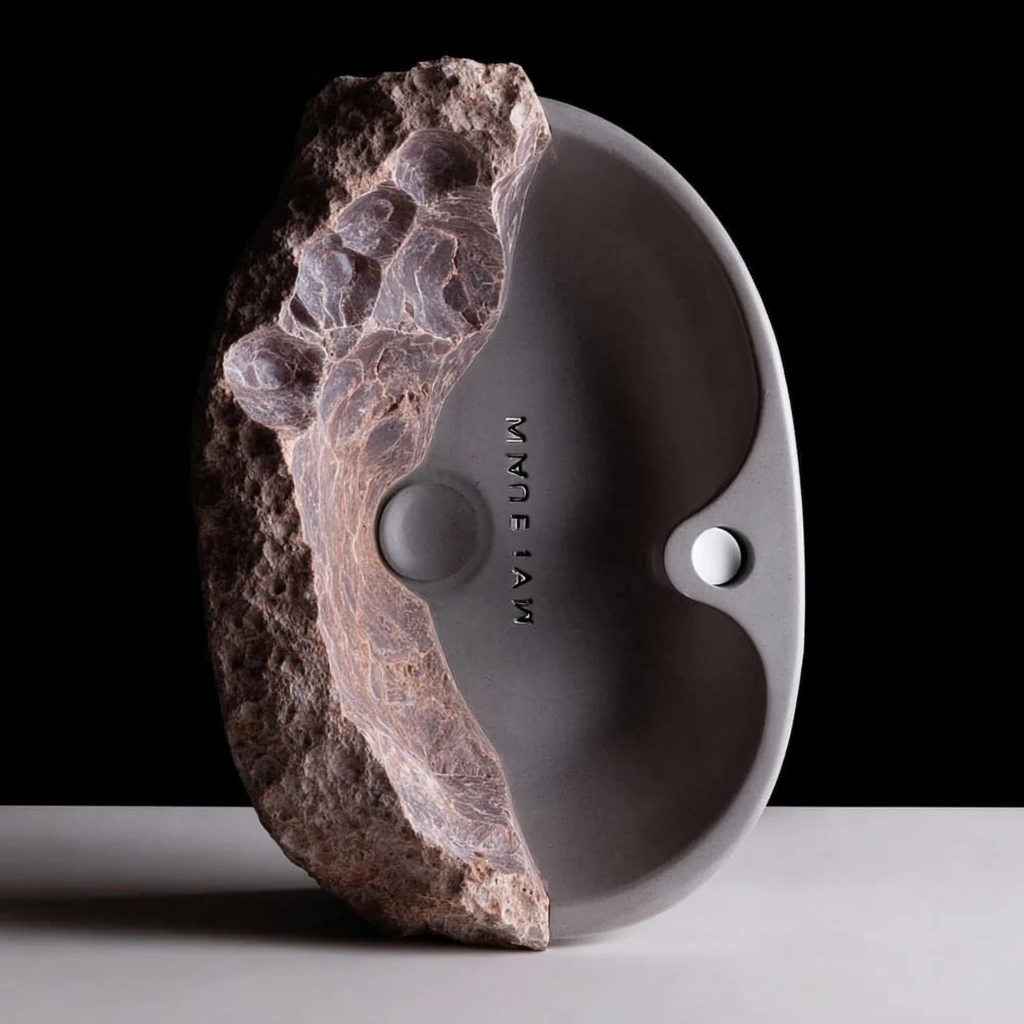

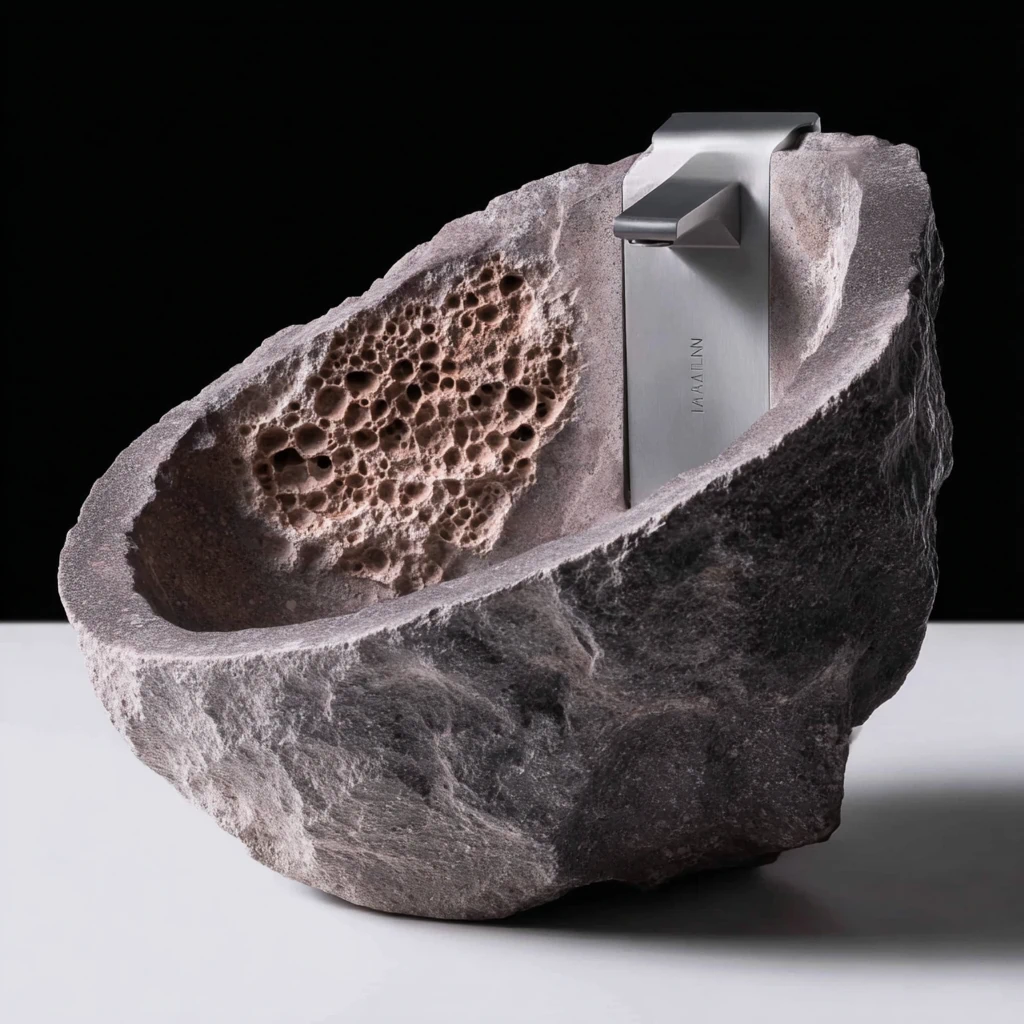

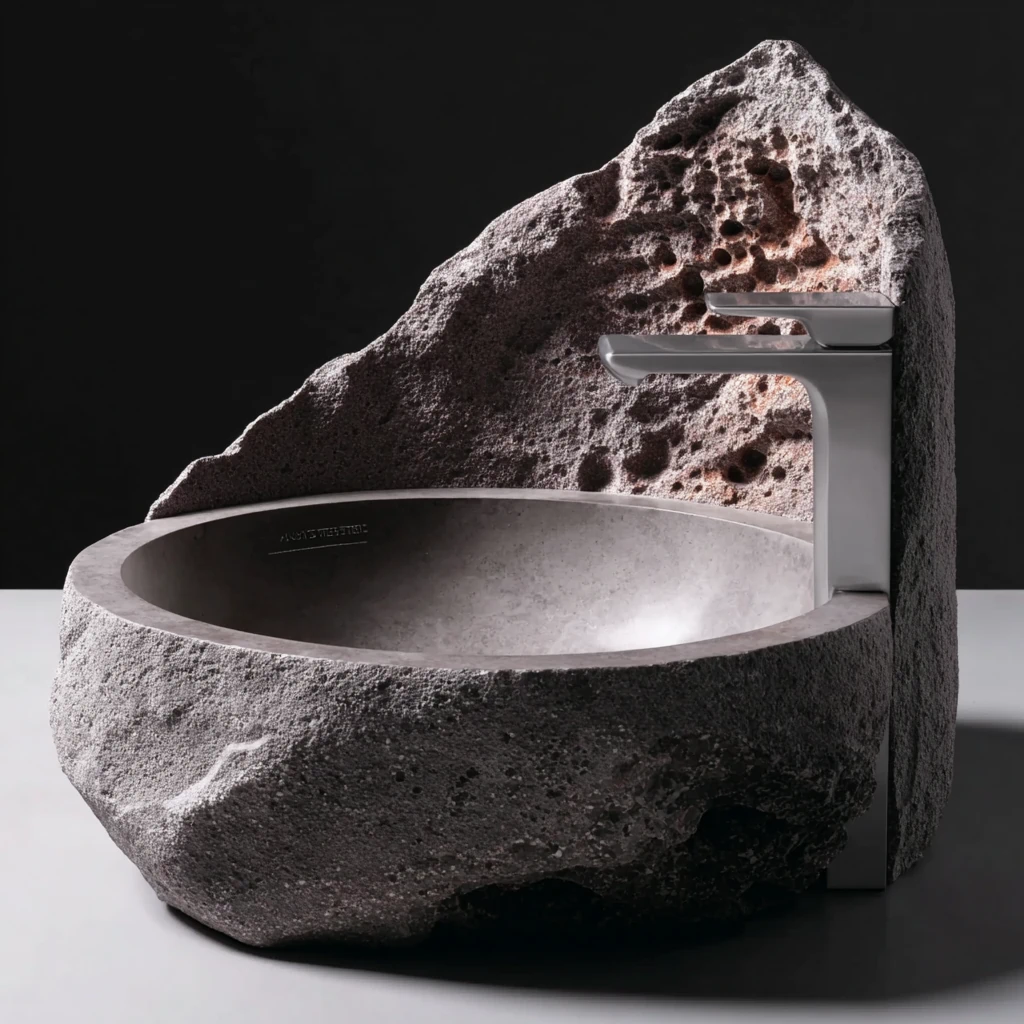
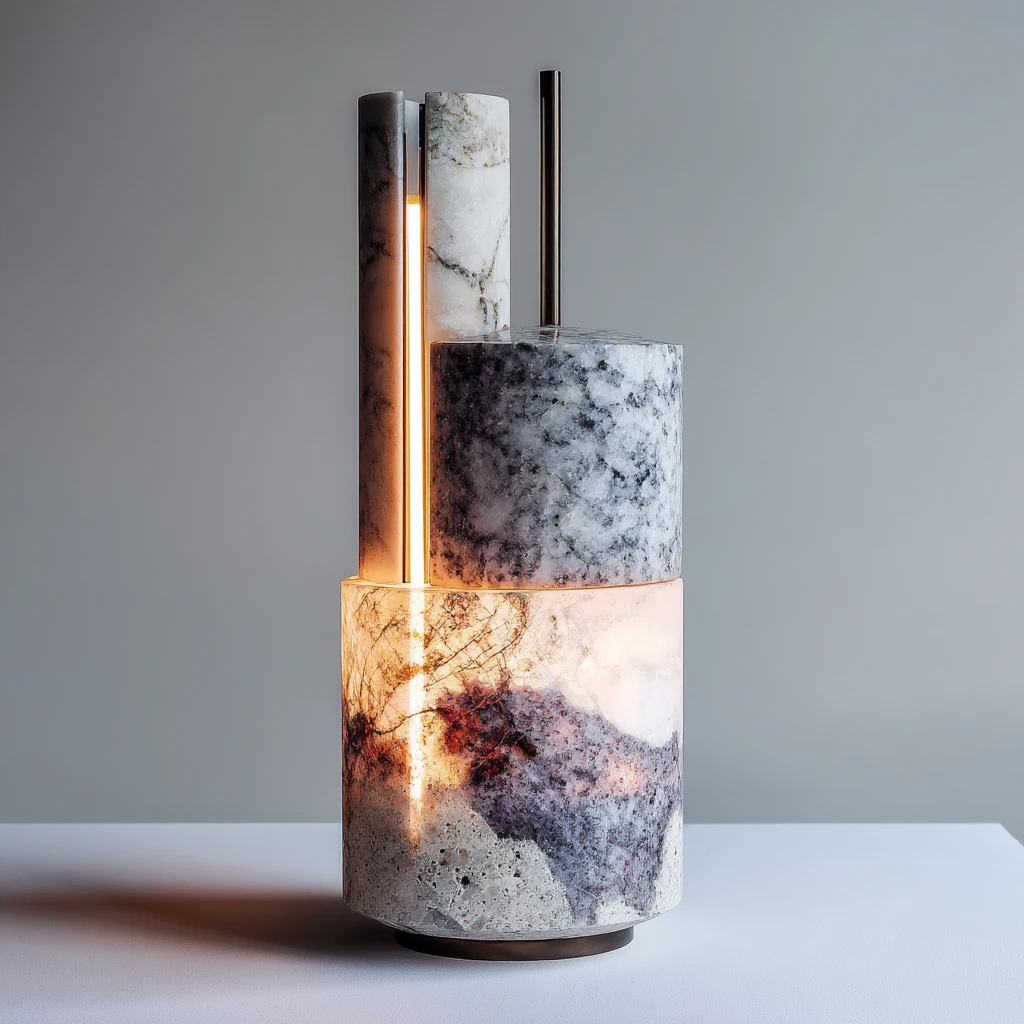
The project investigates how AI-augmented processes can expand the vocabulary of traditional craftsmanship without replacing its sensibility. Data-driven form-finding, simulation, and structural optimization guide the early phases, while the textures, joints, and transitions between materials are entrusted to manual techniques. This hybrid workflow reveals how digital intelligence can support the expressive clarity of handcraft, generating objects that feel simultaneously ancient and novel.